
No items found.

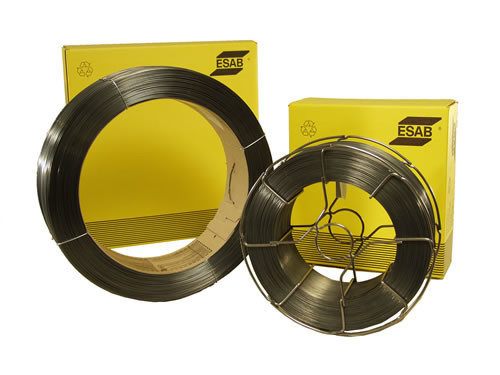
Coreweld C6

Coreweld C6 was developed and "fine-tuned" especially for hand-held, automatic and robotic welding in the automotive industry, as well as rail car manufacturing, structural welding and other similar applications. Never before has there been such a perfect pairing of filler metal and industry requirements for quality, productivity and profitability.

Request A Quote

Highlights

Process

Specifications
Classifications AWS A5.36 : E70T15-M20A2-CS1-H4
AWS A5.36 : E70T15-M21A4-CS1-H4
AWS A5.18 : E70C-6MD H4
Approvals CWB : CSA W48 E491C-6M-H4
ABS
Industry Mobile Equipment
Railcars
Industrial and General Fabrication
Bridge Construction
Civil Construction
Automotive
Ship/Barge Building

Approvals are based on factory location. Please contact ESAB for more information.

Tensile_Properties
Testing Condition Yield Strength Tensile Strength Elongation Reduction in Area
75% Ar - 25% CO2
As Welded 505 MPa 595 MPa 27 % 64 %
90% Ar - 10% CO2
As Welded 545 MPa 595 MPa 25 % 63 %
Charpy Testing
Testing Condition Testing Temp Impact Value
75% Ar - 25% CO2
As Welded -29 °C 76 J
As Welded -40 °C 58 J
90% Ar - 10% CO2
As Welded -29 °C 76 J
Typical Weld Metal Analysis %
C Mn Si S P
75% Ar 25% CO2
0.04 1.6 0.7 0.016 0.012
90% Ar 10% CO2
0.04 1.6 0.8 0.017 0.015
Deposition Data
Diameter Amps Volts Wire Feed Speed Efficiency (Per) TTW Dist Deposition Rate
75% Ar - 25% CO2
1.4 mm 190 A 24 V 440 cm/min 94 % 16 mm 2.5 kg/h
1.4 mm 310 A 27 V 890 cm/min 98 % 16 mm 4.9 kg/h
1.6 mm 290 A 26 V 510 cm/min 95 % 19 mm 4.0 kg/h
1.2 mm 170 A 24 V 510 cm/min 94 % 16 mm 2.4 kg/h
1.4 mm 370 A 30 V 1140 cm/min 99 % 16 mm 6.2 kg/h
1.6 mm 430 A 29 V 890 cm/min 99 % 19 mm 7.2 kg/h
1.4 mm 420 A 32 V 1400 cm/min 99 % 16 mm 7.5 kg/h
1.2 mm 230 A 25 V 760 cm/min 96 % 16 mm 3.5 kg/h
1.6 mm 510 A 33 V 1210 cm/min 99 % 19 mm 9.4 kg/h
1.6 mm 230 A 24 V 380 cm/min 91 % 19 mm 2.81 kg/h
1.2 mm 390 A 32 V 1650 cm/min 99 % 16 mm 7.5 kg/h
1.2 mm 330 A 29 V 1270 cm/min 99 % 16 mm 5.8 kg/h
1.6 mm 370 A 28 V 700 cm/min 96 % 19 mm 5.7 kg/h
1.2 mm 290 A 27 V 1020 cm/min 98 % 16 mm 4.6 kg/h
1.4 mm 240 A 25 V 640 cm/min 95 % 16 mm 3.5 kg/h
90% Ar - 10% CO2
1.2 mm 360 A 33 V 1400 cm/min 99 % 16 mm 6.3 kg/h
1.4 mm 240 A 27 V 640 cm/min 95 % 16 mm 3.5 kg/h
1.4 mm 410 A 36 V 1330 cm/min 99 % 16 mm 7.1 kg/h
1.6 mm 230 A 26 V 380 cm/min 91 % 19 mm 2.81 kg/h
1.2 mm 260 A 28 V 890 cm/min 97 % 16 mm 4.1 kg/h
1.4 mm 340 A 31 V 1020 cm/min 99 % 16 mm 5.1 kg/h
1.4 mm 190 A 26 V 440 cm/min 94 % 16 mm 2.5 kg/h
1.2 mm 290 A 29 V 1020 cm/min 98 % 16 mm 4.6 kg/h
1.4 mm 280 A 28 V 760 cm/min 97 % 16 mm 4.2 kg/h
1.6 mm 430 A 32 V 890 cm/min 99 % 19 mm 7.2 kg/h
1.6 mm 510 A 36 V 1210 cm/min 99 % 19 mm 9.4 kg/h
1.2 mm 200 A 27 V 640 cm/min 95 % 16 mm 3.0 kg/h
1.6 mm 290 A 27 V 510 cm/min 95 % 19 mm 4.0 kg/h
1.6 mm 340 A 29 V 640 cm/min 98 % 19 mm 5.6 kg/h
1.2 mm 330 A 32 V 1270 m/min 99 % 16 mm 5.8 kg/h
Welding_Parameters
Wire Diameter Amps TTW Dist Volts Wire Feed Speed
75% Ar - 25% CO2
1.6 mm 230-430 A 19 mm 24-29 V 381-1219 cm/min
1.4 mm 190-420 A 16 mm 24-32 V 457-1346 cm/min
1.2 mm 170-390 A 16 mm 24-32 V 640-1397 cm/min
1.6 mm 430-510 A 19 mm 30-33 V 889-1219 cm/min
1.6 mm 370-430 A 19 mm 28-30 V 711-889 cm/min
1.6 mm 230-370 A 19 mm 24-28 V 381-711 cm/min
1.4 mm 370-420 A 16 mm 30-32 V 1143-1397 cm/min
1.4 mm 310-370 A 16 mm 27-30 V 889-1143 cm/min
1.4 mm 190-310 A 16 mm 24-27 V 457-889 cm/min
1.2 mm 330-390 A 16 mm 29-32 V 1270-1651 cm/min
1.2 mm 260-330 A 16 mm 26-29 V 889-1270 cm/min
1.2 mm 170-260 A 16 mm 24-26 V 508-889 cm/min
1.6 mm 430-510 A 19 mm 32-36 V 889-1219 cm/min
1.6 mm 340-430 A 19 mm 29-32 V 635-889 cm/min
1.6 mm 230-340 A 19 mm 26-29 V 381-635 cm/min
1.4 mm 340-410 A 16 mm 31-36 V 1016-1346 cm/min
1.4 mm 280-340 A 16 mm 28-31 V 762-1016 cm/min
1.4 mm 190-280 A 16 mm 29-28 V 457-762 cm/min
1.2 mm 200-260 A 16 mm 27-28 V 635-889 cm/min
1.2 mm 260-310 A 16 mm 28-30 V 889-1143 cm/min
1.2 mm 310-360 A 16 mm 30-33 V 1143-1397 cm/min
90% Ar - 10% CO2
1.6 mm 230-430 A 19 mm 24-29 V 381-1219 cm/min
1.4 mm 190-420 A 16 mm 24-32 V 457-1346 cm/min
1.2 mm 170-390 A 16 mm 24-32 V 640-1397 cm/min
1.6 mm 430-510 A 19 mm 30-33 V 889-1219 cm/min
1.6 mm 370-430 A 19 mm 28-30 V 711-889 cm/min
1.6 mm 230-370 A 19 mm 24-28 V 381-711 cm/min
1.4 mm 370-420 A 16 mm 30-32 V 1143-1397 cm/min
1.4 mm 310-370 A 16 mm 27-30 V 889-1143 cm/min
1.4 mm 190-310 A 16 mm 24-27 V 457-889 cm/min
1.2 mm 330-390 A 16 mm 29-32 V 1270-1651 cm/min
1.2 mm 260-330 A 16 mm 26-29 V 889-1270 cm/min
1.2 mm 170-260 A 16 mm 24-26 V 508-889 cm/min
1.6 mm 430-510 A 19 mm 32-36 V 889-1219 cm/min
1.6 mm 340-430 A 19 mm 29-32 V 635-889 cm/min
1.6 mm 230-340 A 19 mm 26-29 V 381-635 cm/min
1.4 mm 340-410 A 16 mm 31-36 V 1016-1346 cm/min
1.4 mm 280-340 A 16 mm 28-31 V 762-1016 cm/min
1.4 mm 190-280 A 16 mm 29-28 V 457-762 cm/min
1.2 mm 200-260 A 16 mm 27-28 V 635-889 cm/min
1.2 mm 260-310 A 16 mm 28-30 V 889-1143 cm/min
1.2 mm 310-360 A 16 mm 30-33 V 1143-1397 cm/min

Fact Sheets

factsheet_icon

Coreweld C6

ESAB pioneered the development of gas-shielded flux-cored welding (FCAW) in 1957. Today, ESAB offers the broadest variety of mild steel and low alloy flux-cored wires available anywhere in the world.

ESAB cored wires offer flat welds with deep penetration and wetting into plate, with high deposition rates and efficiencies. This dramatically reduces weld time, increasing productivity.

Flux-cored welding can be up to three times more productive than Stick and up to 2.5 times more productive than MIG. FCAW also offers productive positional welding and low diffusible hydrogen levels (H5) when required.

ESAB Coreweld metal-cored wires were developed to meet the needs of demanding applications, such as structural steel construction, heavy equipment, transportation, bridges, petrochemical processing, offshore rigs, railcars, shipbuilding, pressure vessels, and general fabrication.

Utilizing advanced manufacturing processes and specially formulated composite fillers, Coreweld metal-cored wires combine high deposition rates and efficiencies, high travel speeds, excellent penetration, and ease of use. Metal-cored wires also provide excellent arc stability and outstanding penetration and wetting, with superior fusion at the root joint and sidewall. The result is a high-quality weld with minimal slag and spatter, and fewer residual silica islands.

Metal-cored wires offer several advantages over solid wire. Since metal-cored wires carry the current on the outer sheath, current densities are considerably higher than those found in wires sold, where the current is carried across the entire cross-sectional area. As a result, the metal-cored arc tends to be softer and can bridge gaps easier with reduced tendancy for burn through.

Get Expert Support Today

Speak with our team for product details, quotations and service queries.

Chat with us on